

1951
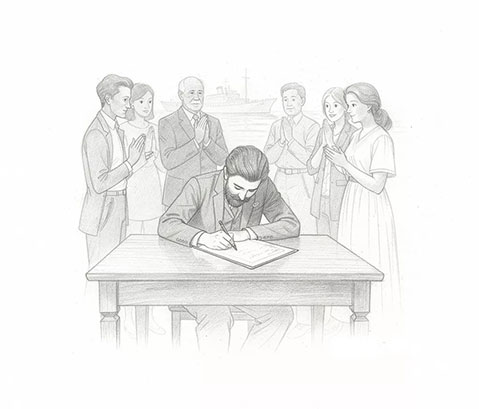
Polish Steamship Company established
A state-owned enterprise established by the Ordinance of the Minister of Shipping dated January 2, 1951.
Polska Żegluga Morska P.P. is a company with a long-standing tradition, whose history dates back to the early years of the post-war reconstruction of Poland’s maritime economy. Since its establishment, the company has consistently developed its fleet and expanded the scope of its operations, strengthening its position as one of the largest shipowners in Europe. Each stage of this journey has helped shape a remarkable story of maritime transport.
In the initial period of its activity, the organisation and development directions of the company were strongly influenced by the management concept implemented under the leadership of its first Director General, Professor Stanisław Karger.
A state-owned enterprise established by the Ordinance of the Minister of Shipping dated January 2, 1951.
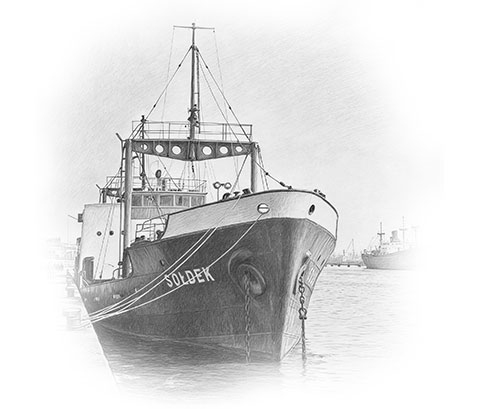
One of the vessels with which PŻM began its operations was the s/s “Sołdek”.
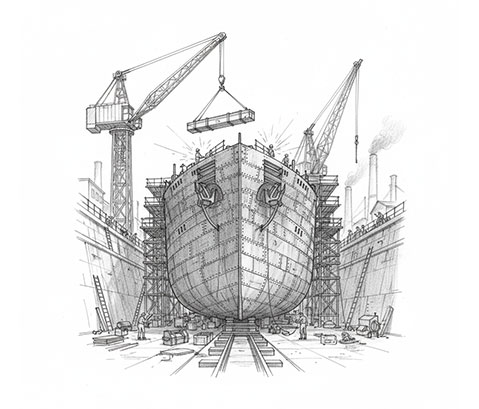
Contracts signed for the construction of new “Liberty” and “Empire” type vessels – enabling the start of ocean-going voyages.
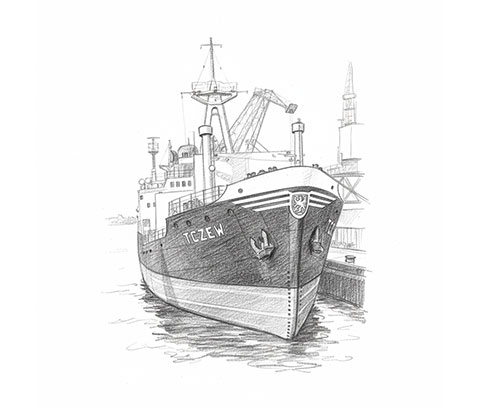
Among the shipping lines opened at the time, the Company launched a West African line.
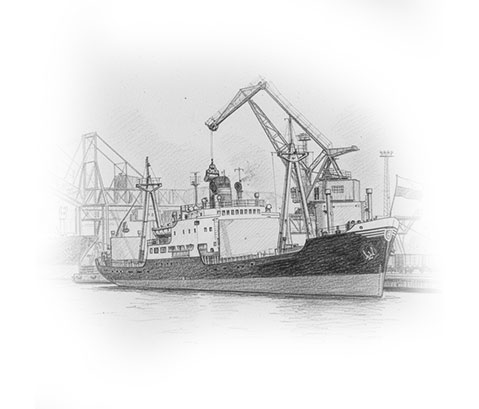
Rapid development of the PŻM P.P. fleet – the fleet exceeds 100 vessels.
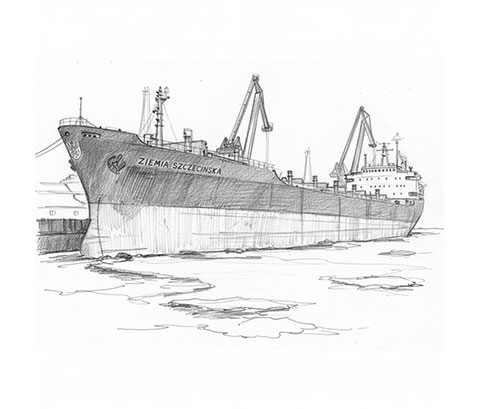
Modern “Ziemia Szczecińska” type vessels enable the shipowner to sail around the world.
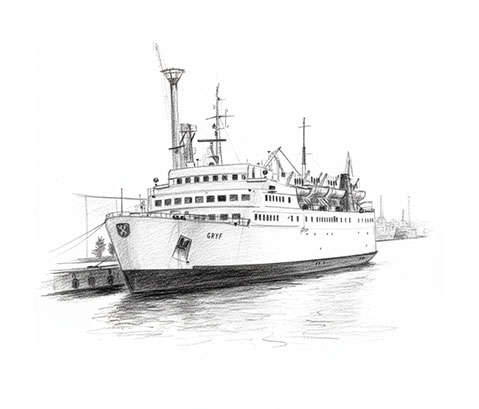
Opening of the Poland–Sweden ferry line operated by the ferry “Gryf”; today four ferries belonging to the PŻM P.P. Capital Group operate on this route.
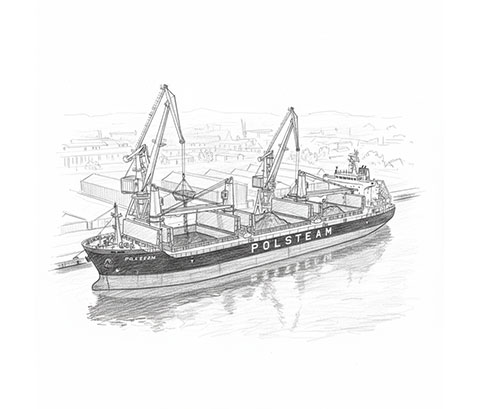
As a result of the merchant fleet reorganisation, PŻM P.P. was designated to operate tramp shipping. This decision led to the transfer of part of bulk and ferry tonnage to PLO P.P., dedicated to liner shipping.
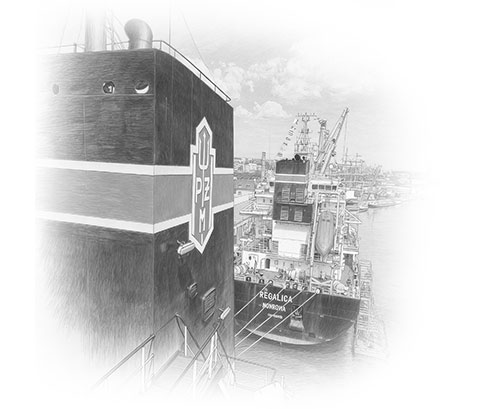
PŻM P.P. begins transporting liquid sulphur. In subsequent years, the shipowner becomes a global leader in this market segment.
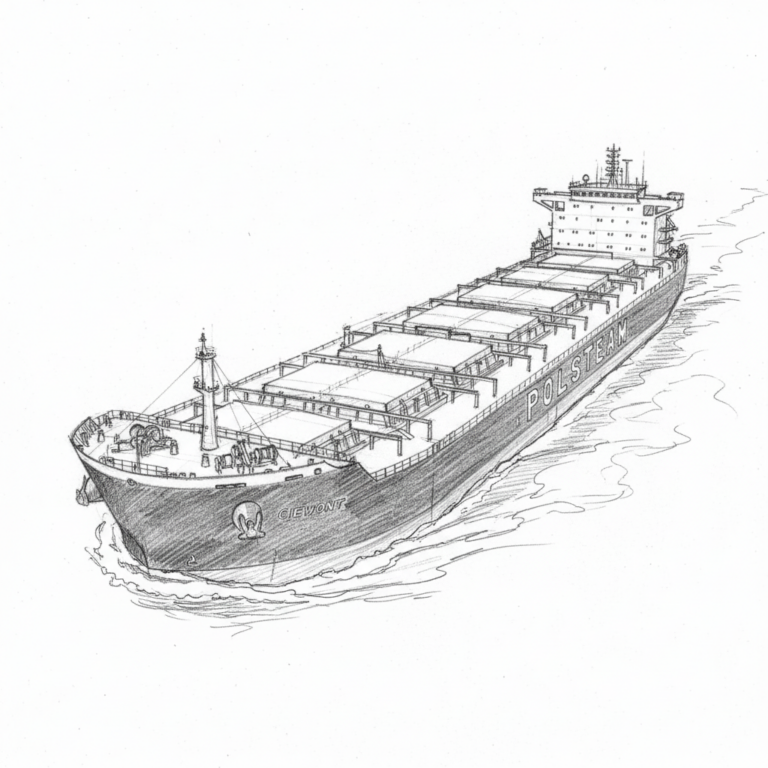
A new business area: supertankers with deadweight over 140,000 tonnes – the largest vessels in the history of PŻM P.P. and the Polish merchant fleet.
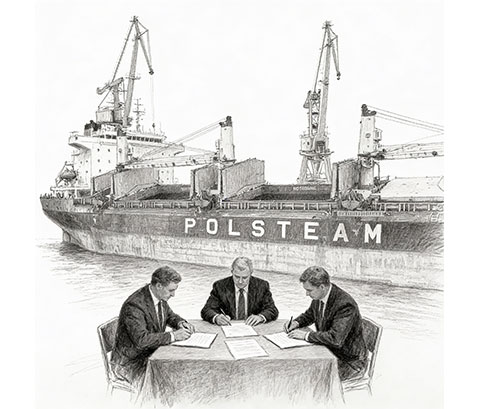
The shipowner signs its first foreign contract with British shipyards to build 22 new vessels.
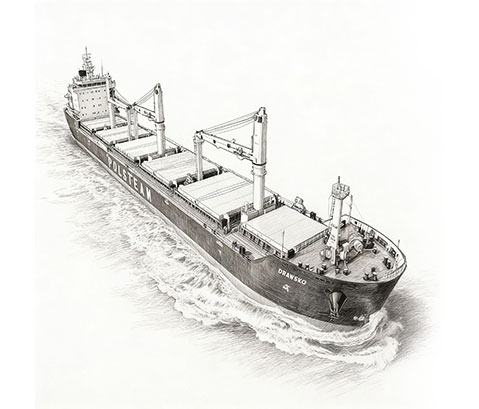
First commercial voyages in the Great Lakes region – today a strategic segment of the PŻM P.P. Capital Group’s activity.
The economic crisis in Poland forces the shipowner to offer its transport services to foreign cargo operators.
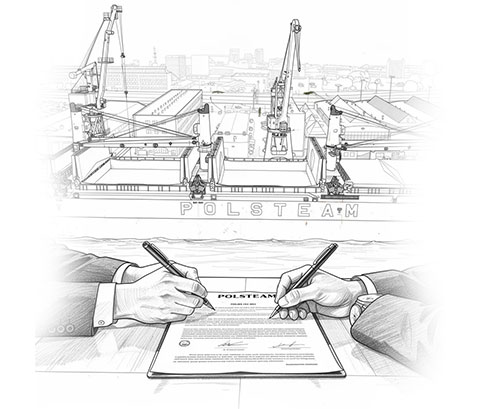
Start of long-term cooperation with what was then the world’s largest grain house – Cargill Ltd. In later years, this segment is joined by Louis Dreyfus Company and Toepfer GmbH.
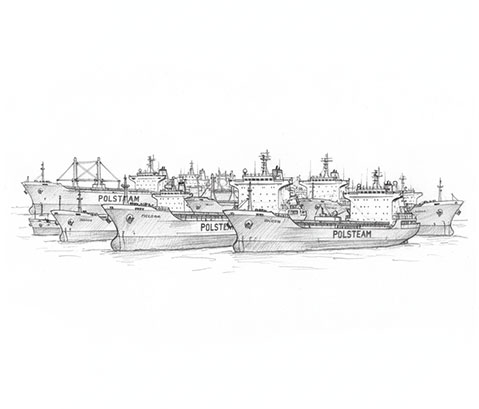
By the end of 1985, the PŻM fleet numbered 127 vessels.
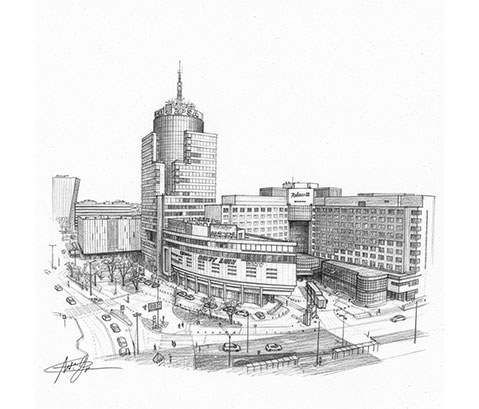
New headquarters: the Pazim office and hotel complex in Szczecin, owned by the PŻM P.P. Capital Group.
Diversification of PŻM P.P. into a number of special-purpose companies operating within the PŻM P.P. Capital Group, with PŻM P.P. remaining the parent entity.
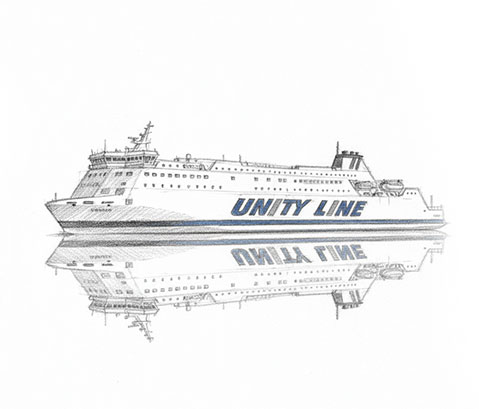
Establishment within the PŻM P.P. Capital Group of a company dedicated to operating ferries – Unity Line – and the entry into service of the ferry “Polonia”.
The deepest internal crisis in the history of PŻM P.P. – a recovery plan for the enterprise is developed.
Restructuring within the PŻM P.P. Capital Group – simplification of the structure, liquidation of unprofitable activities, reduction of employment.
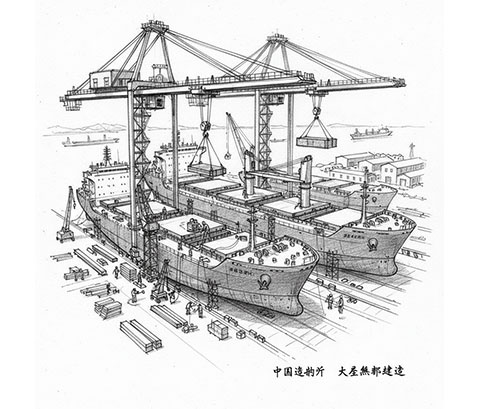
Signing a contract with Tianjin Xingang Shipbuilding Heavy Industry Co. Ltd in China for the construction of four bulk carriers; in subsequent years the shipyard builds a total of 18 bulk carriers for the PŻM P.P. Capital Group, each of approx. 38,000 DWT.
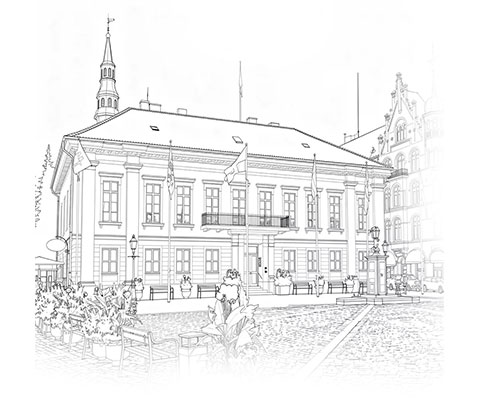
Expansion of the ferry transport offer to Ystad.
The Group’s fleet is reinforced by further vessels contracted in China: lakers, universal handymax and panamax types.
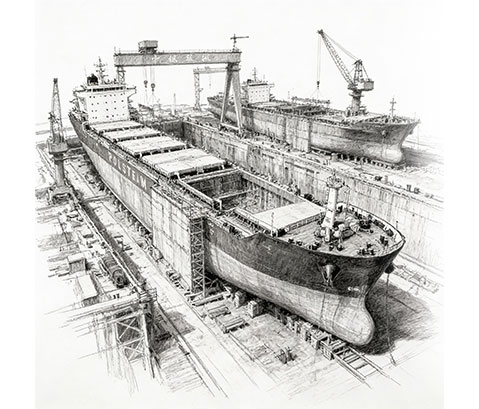
More modern kamsarmax-type vessels built in Japan enter service.

A prolonged freight market crisis creates a threat to the Group’s liquidity; by decision of the Minister of Maritime Economy, receivership management is introduced to implement a recovery programme.
Stabilisation of the financial situation of the PŻM P.P. Capital Group – receivership management is lifted and the Company’s governing bodies are restored.
A new strategy for the coming years; strengthening strategic business segments: bulk and ferry transport, and new investment directions.
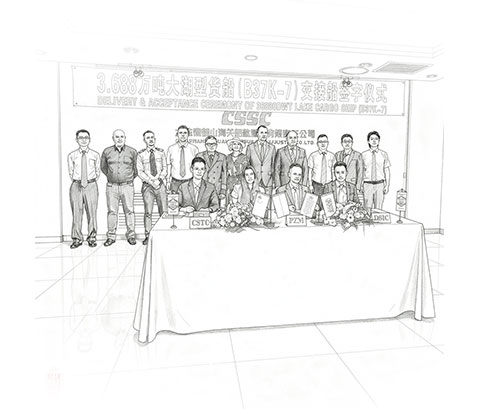
Start of execution of a contract for 12 lakers at a Chinese shipyard from the Dalian Shipbuilding Industry Company (DSIC) group
Signing a contract to build handysize bulk carriers of 45,000 DWT at the Wuhu Weihai shipyard
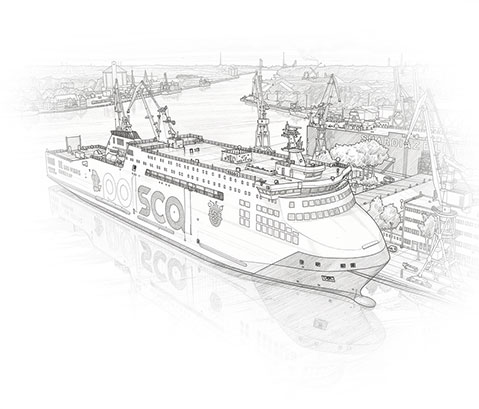
Entry into service of the m/f Jantar Unity ferry, built at the Gdańsk Repair Shipyard
