

History of the Ship Godmothers Club
Discover the origins of the Club and the enduring traditions that have accompanied our activities from the very beginning.
On the tradition of ship christenings
“Sail across the seas and oceans of the world, spread the fame of the shipbuilder and the seafarer. I give you the name…”.
A bottle of champagne shatters against the hull. The steel body, released from its blocks, slides down the slipway and, gaining speed, crashes powerfully into the water.
This is, in short, the scenario of a ship launching and maritime christening. Over the years, more than two thousand such ceremonies have taken place in Polish shipyards.
In the 1970s, they sometimes occurred even twice a week. In the past, these events were celebrated with greater pomp, especially when the vessel was in some way exceptional.
There were ceremonies attended by the highest-ranking state officials. For several decades now, the formerly secular celebrations have usually been accompanied by a religious element.
To appease dangerous deities
The oldest information about ship christenings comes from Egyptian hieroglyphs dating back around 4,000 years. Originally, the maritime christening was primarily a religious ceremony. Ancient sailors dedicated their ships and boats to powerful elemental deities in order to gain their favour. Water was used as a symbol of purification and blessing, while wine was poured in a toast wishing prosperity to the new vessel. In communities practising blood sacrifices to appease the gods, the maritime christening was sometimes sealed with blood. Vikings placed slaves on the slipway during launches; the sliding hull crushed their bodies.
Later, humans were replaced with vessels filled with animal blood or even red paint. For example, inhabitants of the Solomon Islands still decorated the bow of a new boat with the head of a ritually killed captive at the beginning of the 20th century.
In medieval Europe, the christening of a ship became a clearly liturgical ceremony, most often conducted by high-ranking church dignitaries. In England during the Tudor period, it also took on the character of a state ceremony, complete with rich ceremonial setting. The king himself would often attend, raising a ceremonial toast and throwing a golden goblet into the water. Over time, the practical-minded English considered this wasteful and introduced the practice of breaking a bottle of wine against the hull. Following the French Revolution and secularisation, water and red wine were replaced with champagne. This custom eventually became the most widespread.
Water, wine or maybe a coconut?
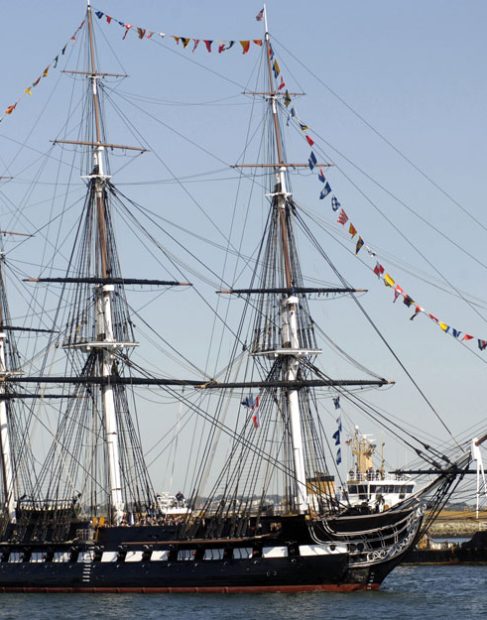
According to an anecdote, the replacement of water by wine, and later champagne, was influenced by an incident that took place at a shipyard in Boston. When the USS “Constitution”, christened with water, refused to slide down the slipway, its bowsprit was sprinkled with Madeira wine – and only then did the hull begin to move. Forgetting this experience, Americans once again returned to the water tradition during the Prohibition era. The failure of this attempt was complete, and it is no wonder that President Roosevelt firmly rejected a petition by American women calling for the removal of alcohol from maritime christening ceremonies.
In Poland, as in most other countries, the champagne tradition prevailed. However, when a ship is launched for a foreign shipowner, the shipyard follows their customs, which are sometimes different. In Muslim countries, the use of wine is forbidden by religious rules, so the champagne bottle is replaced with a coconut. When the recipient was an Indian shipowner, the hull was decorated with greenery and then sprinkled with grain. For ships built for the People’s Republic of China, the ceremony was limited to cutting a red ribbon.
Different than usual
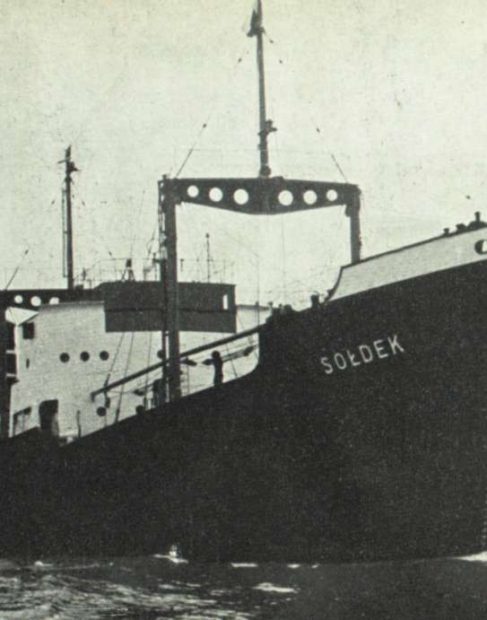
Among the hundreds of launches that took place in Polish shipyards, there are some that will never be forgotten. A historic date remains 6 November 1948, when the first ocean-going vessel built in post-war Poland, the ss “Sołdek”, was launched at the Gdańsk Shipyard, with Helena Sołdek as its Godmother. Also remembered is the unsuccessful launch attempt of the “Olza” at the Gdańsk Shipyard on 8 September 1939. Despite the release of the blocks and proper execution of all procedures, the hull did not slide into the water.
Attempts to pull the ship using tugboats were also unsuccessful. As later discovered, the vessel had been deliberately stopped by German saboteurs who placed bolts and rivets under the slipway skids.
Ship Godmothers
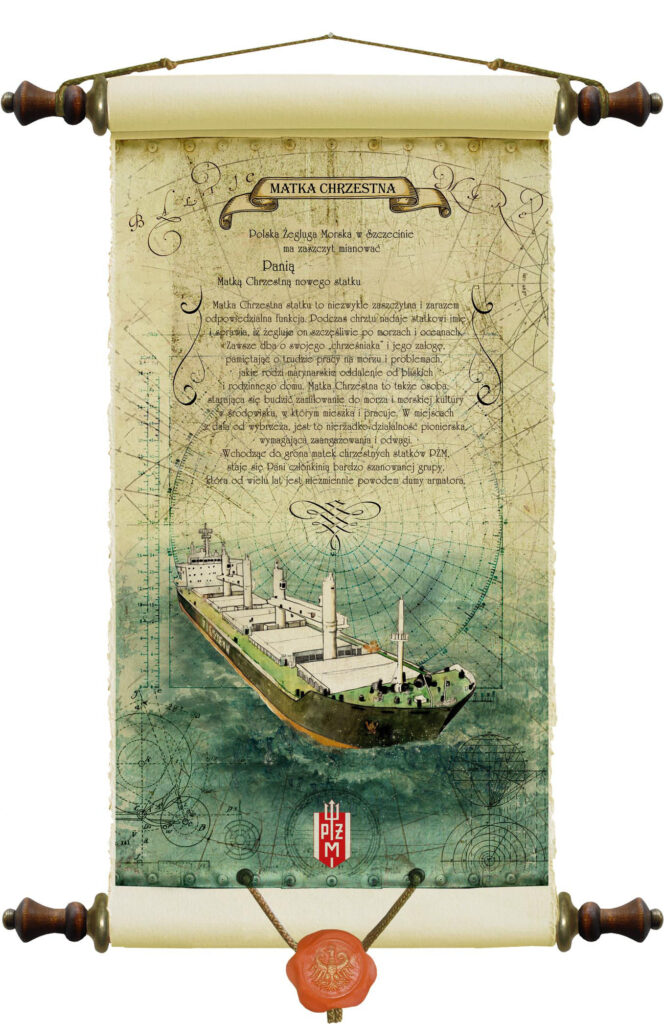
The central figure of the christening ceremony is, of course, the Godmother, although it should be noted that in very rare cases this role has been performed by men or even small children. The youngest Godmother was a two-year-old Japanese girl. In Poland, the role of Godfather has been held, for example, by the Ambassador of India. The Godmother is appointed by the shipowner, or less frequently by the shipyard. In the past, Godmothers were often wives of high-ranking state officials. For example, the Godmother of the vessel m/s “Górny Śląsk” was Stanisława Gierek, wife of Edward Gierek, First Secretary of the Polish United Workers’ Party. Godmothers have also included Jolanta Kwaśniewska, wife of former President of Poland Aleksander Kwaśniewski, and Anna Komorowska, wife of former President Bronisław Komorowski. Much more often, however, they are people distinguished in a given region, social activists, athletes or artists. For many years, Godmothers of PŻM Group vessels have also been outstanding female employees of PŻM.
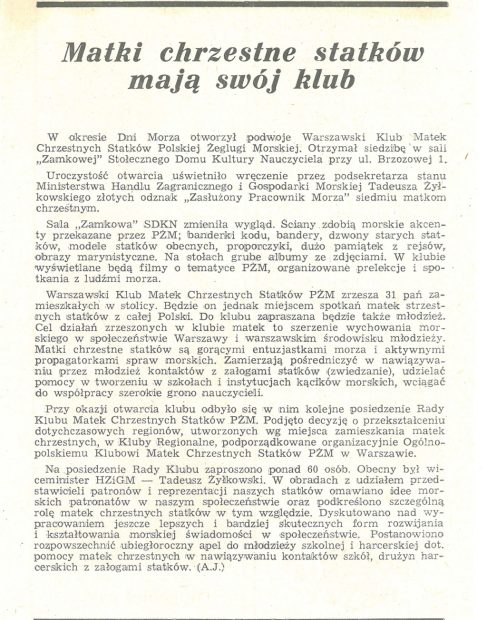
The 1st General Assembly
The 1st General Assembly of Ship Godmothers was held on 14–15 May 1976 in Szczecin. During the Assembly, the Director General of PŻM, Mr Ryszard Karger, solemnly announced the establishment of a Club bringing together all Godmothers of PŻM vessels under the name “Ship Godmothers Club”.
During the Assembly, the first Club Council was elected, consisting of:
- Janina Bukowska – Prokop – Chairwoman (m/s Transportowiec)
- Irena Kruczek (m/s Bieszczady)
- Karolina Paluch (m/s Politechnika Szczecińska)
- Kinga Borowiec (m/s Kopalnia Sosnowiec)
- Zofia Dąbrowska – Lademan (m/s Batalion Czwartaków)
- Wanda Paszkiewicz – Gajewska (m/s Siekierki)
- Helena Sołdek (m/s Sołdek)
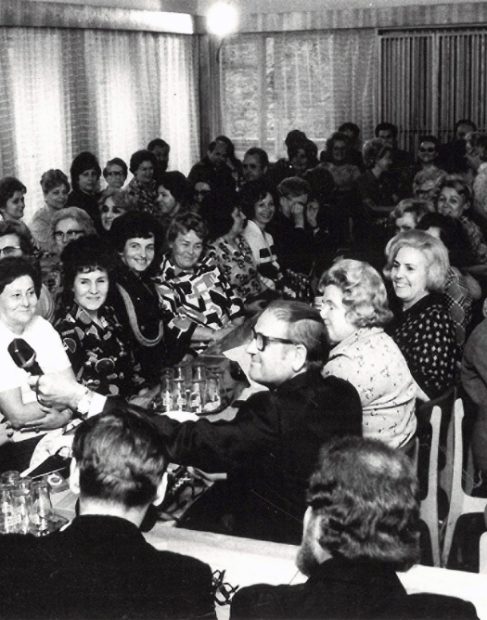
According to the Club’s statutes, General Assemblies were held every four years, during which new authorities of the Club were elected.
The honorary position of Club Chairwoman was held by:
- 1984–1988 – Zofia Dąbrowska – Lademan (m/s Batalion Czwartaków, m/s Czwartacy AL)
- 1988–1996 – Leokadia Kajca (m/s Kutno II)
- 1996–2002 – Krystyna Tomczyk – Mrzygłód (m/s Kaliope)
- 2002–2014 – Elżbieta Marszałek (m/s Powstaniec Listopadowy)
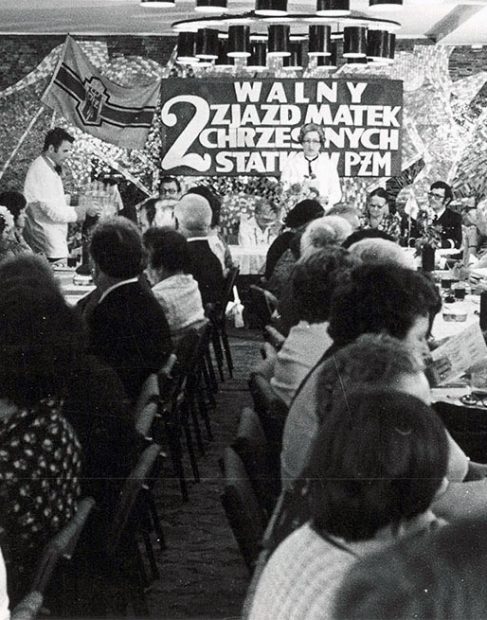
The most recent Assembly was held on 26–27 September 2014, during which new Club authorities were elected:
- Alicja Węgrzyn – Grześkowiak – Chairwoman (m/s Kaszuby)
- Teresa Malisa – Vice-Chairwoman (m/s Polesie)
- Wanda Placha – Vice-Chairwoman (m/s Nogat)
- Alicja Gajewska – Vice-Chairwoman (m/s Kociewie)
- Joanna Wolska – Club Secretary (m/s Prosna)
- Elżbieta Marszałek (m/s Powstaniec Listopadowy) was appointed Honorary Chairwoman of the Club
